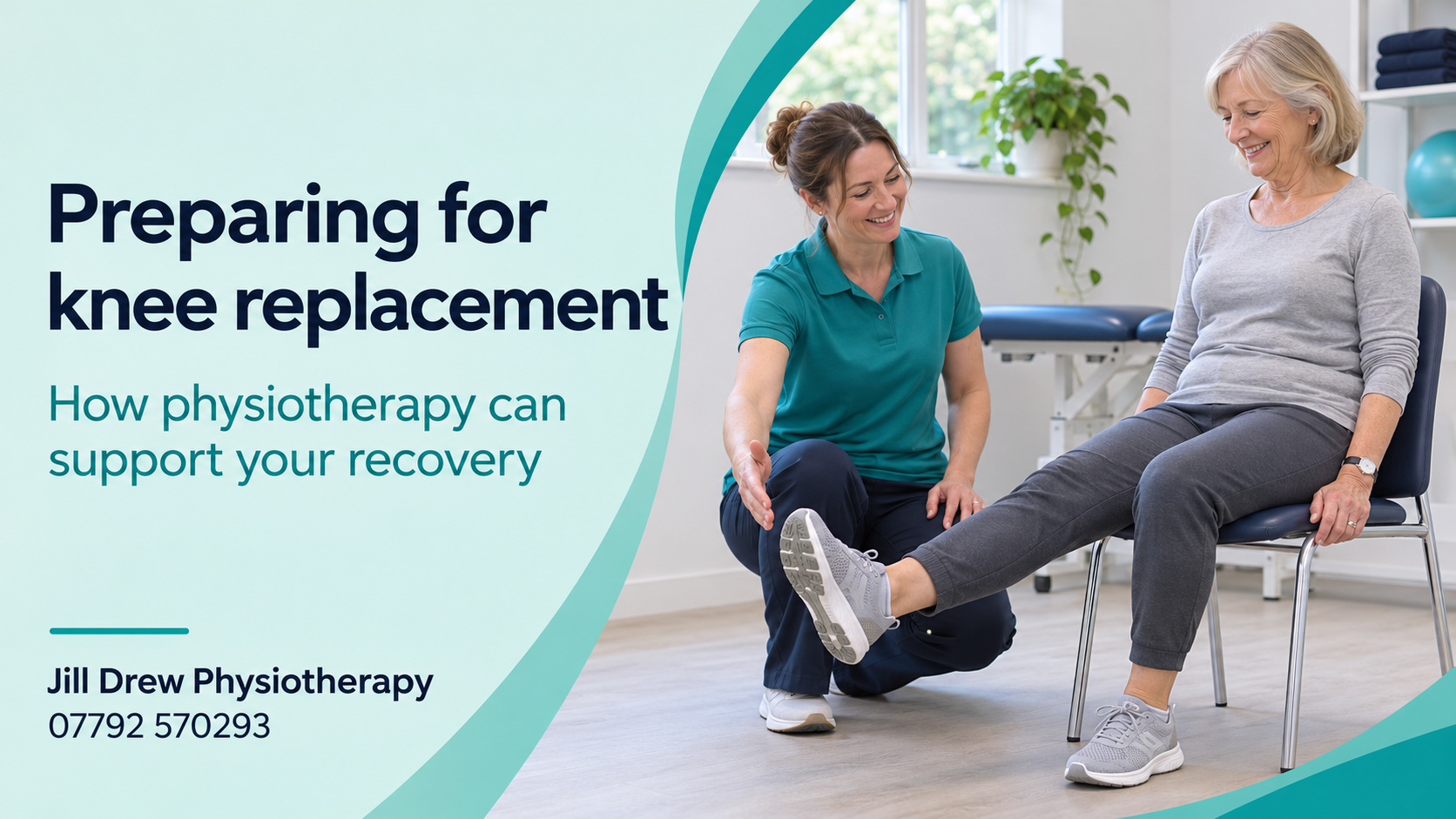
A physiotherapist’s guide; Recovering after a knee or hip replacement?
If you’re waiting for a hip or knee replacement, you might be wondering how soon you’ll be able to walk the dog, manage the stairs or get back to gardening. These are exactly the sorts of goals that can shape your physiotherapy, both before and after surgery.
Recovery varies from person to person and can take several months. Your starting point, general health and the support you have during rehabilitation can all influence how things go. Here are six areas worth discussing with your physiotherapist or surgical team.
1. Build the leg strength you can before surgery
The quadriceps muscles (at the front of your thigh) and your Gluteal muscles (in your bottom) , help you straighten your knee, get up from a chair and manage stairs. When your knee or hip has been painful for a long time, it’s easy to do less of the everyday movement that keeps those muscles working.
A physiotherapist can help you find a starting point that suits your knee or hip. That might mean practising standing up from a higher chair or starting with a supported exercise. If pain limits what you can do, a smaller movement or a different exercise may be more manageable, we can prescribe bespoke exercises that are tailored to your ability, pain levels and post op goals.
2. Keep moving in a way your knee can tolerate
Staying active while you wait for surgery can help you maintain some of the mobility and independence you already have. A short walk on level ground, a few minutes on a stationary bike or gentle exercise in water might suit you, depending on what feels comfortable and what you can access.
If one long walk regularly leaves you sore for the rest of the day, try breaking it into shorter outings. Your physiotherapist can help you work out how much to do and how to adjust on days when your knee is more painful.
3. Get support with weight management if it’s relevant to you
Weight management may form part of your preparation for surgery. It can be particularly difficult to stay active when every step hurts, so the conversation needs to take account of what you can realistically manage. Physiotherapy can help you explore ways to move within your current ability, while your GP or surgical team can advise on any weight-related goals that are appropriate for you.
4. Plan around your wider health
If you live with diabetes, heart or lung problems, or another long-term condition, ask your pre-operative team how it might affect your preparation and recovery. It’s also worth telling your physiotherapist if your other knee, your back or your hands are painful. Those details can make a practical difference when you’re learning to use crutches, getting out of a chair or planning how you’ll manage at home.
5. Set goals that matter to you
It’s understandable to feel apprehensive about moving a newly operated hip or knee. Knowing what to expect can make those first steps feel more manageable. Your early goals might be getting to the bathroom safely, bending and straightening your knee, or walking a little further with your walking aid. Later, you might work towards walking to the local café or getting back out in the garden.
If pain, worry or fear of movement is making it hard to get going, tell your physiotherapist. They can talk through what you’re experiencing and adapt the plan with you.
6. Make your rehabilitation manageable at home
After surgery, follow the rehabilitation advice from your hospital team. Early physiotherapy usually focuses on getting you moving safely, helping you regain knee movement and giving you exercises to continue at home. As you recover, the programme can progress towards rebuilding strength and practising the activities you want to return to.
A plan has to fit your day. If swelling, fatigue or difficulty with an exercise is getting in the way, let your physiotherapist know. A change to the exercise or the amount you’re doing may make the programme easier to keep up with.
How we can help at Jill Drew Physiotherapy
If you’re preparing for a knee replacement, a physiotherapy appointment can help you work out what to practise now and what might make those first days at home easier. If you’ve already had surgery, we can help you build on your hospital rehabilitation and work towards the everyday activities you want to get back to.
…